

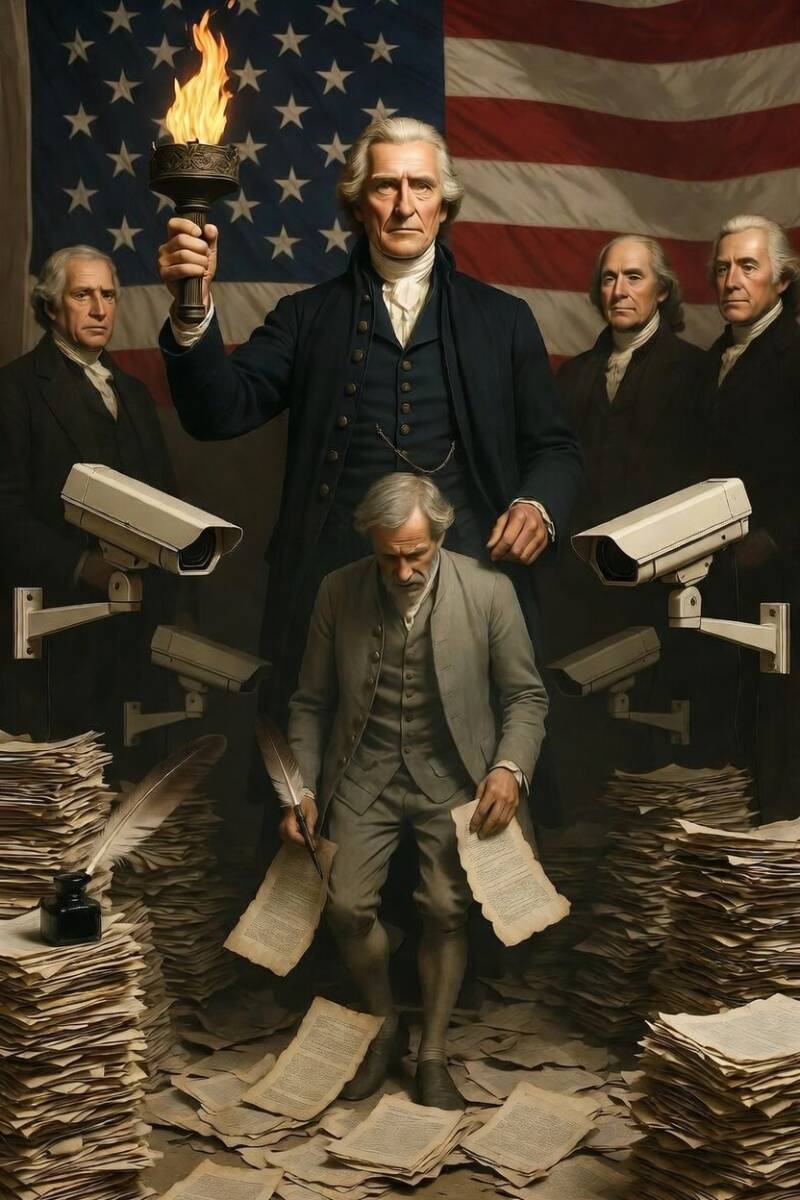
The UK has quietly buried its most ancient rights, the ones that once made it the envy of every freedom-loving soul across the centuries. No dramatic overthrow, no public shredding of charters. Just a slow, bureaucratic smothering by "reforms" and "safety" measures that chip away at liberties until they're barely recognizable.
Magna Carta's core promise from 1215, that no free man imprisoned, disseized, or punished except by the lawful judgment of his peers or the law of the land, now feels like a quaint historical footnote. Jury trials, that hard-won safeguard against arbitrary state power, are being slashed for any offense likely carrying less than three years in prison. The government calls it clearing court backlogs; the reality is defendants lose the right to have ordinary people, not Crown employees, decide their fate in a huge swath of cases. What was once a bulwark against tyranny becomes optional for "efficiency."
Protest itself, the rowdy heir to those barons who dragged King John to Runnymede, now requires permits, noise limits, and the constant threat of bans or prison for "serious disruption" or "locking on." Peaceful assembly isn't a right anymore; it's a conditional privilege the state can revoke when it gets inconvenient.
Habeas corpus lingers on paper, but stretched detentions, control orders in new packaging, and secret evidence proceedings make liberty feel more like a temporary loan than an inheritance.
The internet, today's public square, gets locked down with age gates, ID checks, and filters deciding what's too "harmful" to see. Art, history, dissent all potentially scrubbed for their own good under the Online Safety Act.
America is the child of England in so many ways. Our Founding Fathers didn't invent these ideas; they inherited them, revered them, and baked them into our founding documents. Jefferson, Franklin, Madison, they looked to Magna Carta, the English Bill of Rights and common law traditions as the blueprint for resisting tyranny. The Fifth Amendment's due process, the Sixth's right to jury trial, the First's free speech and assembly; these weren't new inventions but direct descendants of those ancient English liberties. The colonists screamed that King George was violating the "rights of Englishmen," rights rooted in the same soil that produced the Great Charter. When they broke away, they didn't abandon the legacy; they preserved and expanded it, writing protections into stone so no future government could quietly erode them.
Watching the mother country discard these birthrights hits hard. It's like seeing a parent forget their own lessons, the ones they taught us to hold sacred. The land that gave the world the idea no one is above the law now treats those safeguards as outdated inconveniences, tradable for quicker courts or safer feeds. There's a deep sadness in it; the slow fade of something noble, something that once inspired revolutions and republics.
We Americans still carry the torch, jury trials intact, speech fiercely defended (mostly), protests loud and messy. But it's a reminder: liberties aren't eternal. They require vigilance, or the same polite erosion that started across the Atlantic could creep here too. Magna Carta didn't die in battle; it died in committee rooms and good intentions. Let's not let our inheritance follow the same quiet path. We asked for freedom once, and the founders delivered. Time to keep earning it.
Create Your Own Website With Webador